

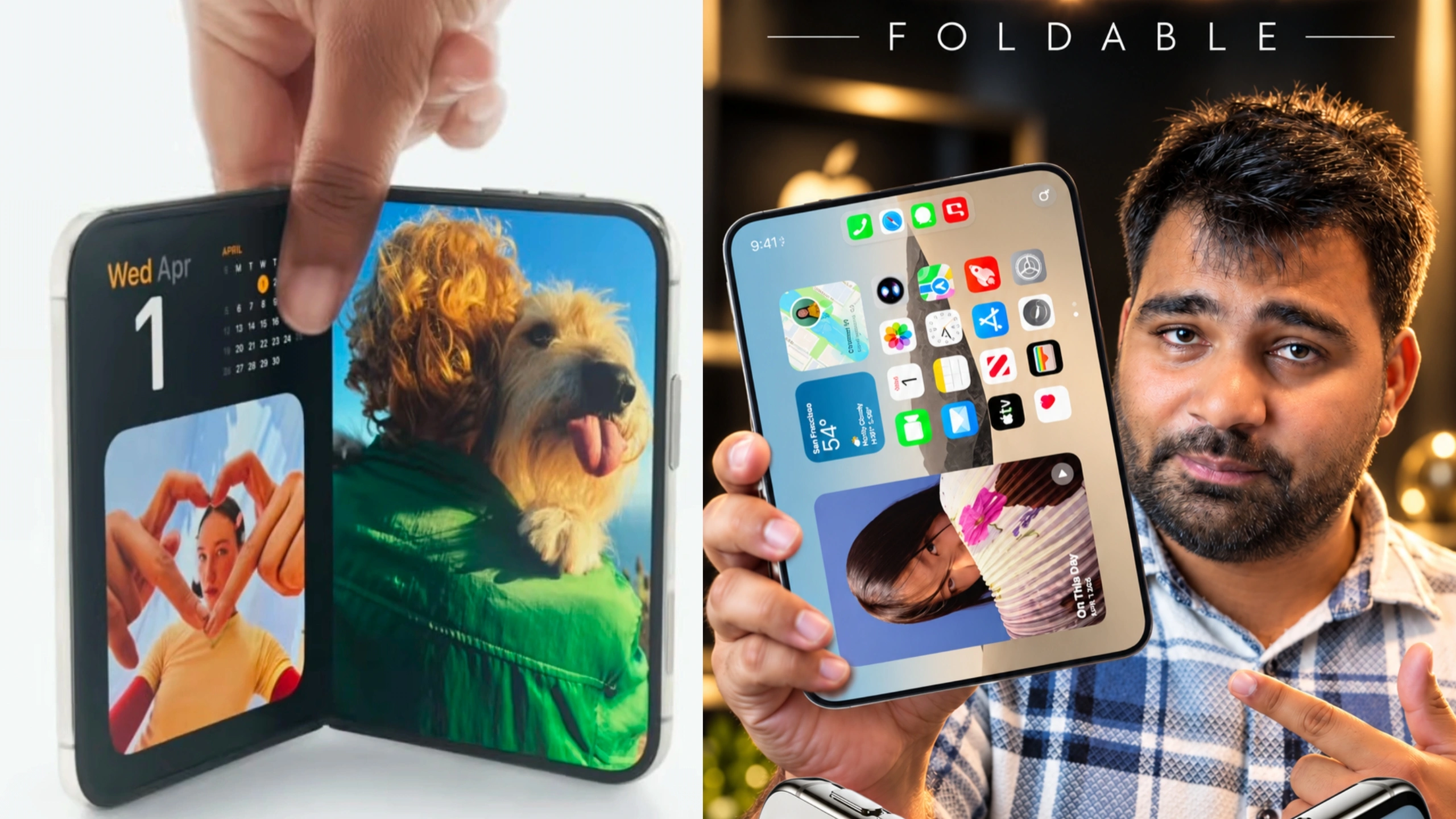
Apple’s iPhone Duo is not simply an iPhone with a flexible screen. The company has redesigned the physical layout, software behavior and camera workflow around a device that can operate as a compact 5.4-inch phone, a 7.6-inch mini-tablet, or a self-supporting screen when partially folded. Announced on September 9, 2026, the Duo is Apple’s first foldable iPhone and will arrive in the United States on October 23 after preorders begin October 16. It starts at $1,999, but the more important story is how Apple is trying to make the fold itself useful instead of treating it as a visual trick.
The first-generation model combines a Grade 5 titanium frame, a precision hinge, dual displays, the A20 Pro chip, a dual-battery layout and iOS 27.1 features built around multiple postures. Apple is also making several unusual choices, including Touch ID in the side button rather than Face ID and a hidden camera beneath the inner display. Those decisions show where Apple prioritized consistency and screen space. For buyers, the real question is whether the Duo’s software and hardware advantages are meaningful enough to outweigh the extra cost, weight, moving parts and long-term durability questions that come with any foldable.
The iPhone Duo is designed around two equal-status displays
The outer Super Retina XDR display measures 5.4 inches, while the inner folding Super Retina XDR panel measures 7.6 inches. Apple says both use the same aspect ratio, which is a subtle but important decision because it reduces the amount of awkward resizing when a user moves from the cover screen to the unfolded display. The outer panel is intended to function as a complete iPhone interface rather than a narrow notification window. Apple says it provides 90 percent of the screen area of the iPhone 18 Pro despite the Duo’s compact closed footprint.
When opened, the inner panel is 50 percent larger than the iPhone 18 Pro Max display, according to Apple. Both screens support ProMotion and Always-On functionality, and Apple rates peak outdoor brightness at 3,000 nits. The inner display receives a nano-texture treatment designed to reduce reflections and make the crease less visible. No foldable display can eliminate the mechanical reality that the panel bends at the center, so independent testing will be important, but Apple is clearly focusing its first-generation messaging on minimizing the visual and tactile compromises that have defined earlier foldables.
A hinge with more than 100 components is the mechanical centerpiece
Apple says the Duo’s precision hinge contains more than 100 components and is engineered to support the center of the screen when the device is open. Magnets help secure the phone when closed, while the hinge can hold the phone in partially folded positions. That “free-stop” behavior is essential because it turns the hinge into a functional stand for video calls, photography, video playback and other hands-free tasks. The device also uses internal support ribs and ceramic-fiber antenna inserts to improve stiffness without eliminating radio performance.
The frame is made from Grade 5 titanium with a mirror-polished finish, and Apple uses a 3D-printed titanium hinge cover with a contrasting micro-blasted texture. Ceramic Shield materials protect the exterior, and Apple lists an IP68 rating for splash, water and dust resistance. The inner panel uses a custom polymer cover layer, scratch-resistant coating, high-strength glass layers, custom adhesives and a titanium plate below the display. Those details sound reassuring on paper, but foldable durability depends heavily on repeated cycles, debris exposure and repairability. Long-term testing will matter more than launch-day demonstrations.
iOS 27.1 is where Apple has to prove the foldable concept
Hardware alone cannot make a folding phone useful, and Apple is adapting iOS around the Duo’s larger canvas. When the phone is open, users can place two apps side by side in Split View, run two windows of the same app, save app pairs and switch between windows without returning to a single-app layout. Apple has also changed the placement of some interface elements so controls, navigation and status information use the sides of the larger display more efficiently. The goal is to avoid merely stretching an ordinary iPhone app across a tablet-like screen.
Apple has named Netflix, Zoom and Slack among early third-party apps designed to take advantage of the form factor. Zoom can use the inner panel to show shared content and participants at the same time, while Slack can display more of a workspace without constant navigation. Apple says developers can use updated APIs in its SDKs to adapt their apps, and support in Xcode’s Device Hub is planned. The quality of those adaptations will determine whether Duo feels like a new computing mode or just an expensive iPhone with more empty space.
The camera system trades a dedicated telephoto for foldable-specific tricks
The Duo uses a 48MP Fusion Main camera and 48MP Fusion Ultra Wide camera. It does not include the dedicated 48MP telephoto found on the iPhone 18 Pro family, which is an important distinction for photography-focused shoppers. The Main camera can also deliver an optical-quality 2x crop, while the Ultra Wide supports macro photography. Apple says the Main camera records 4K Dolby Vision video at up to 120 frames per second, and the phone supports features such as Photographic Styles with texture and grain controls.
The foldable body enables features that a standard slab phone cannot easily reproduce. A user can frame a selfie using the rear cameras while viewing the shot on the outer display, or show the live preview to a subject while the photographer uses the inner screen. Apple calls one mode Duo Preview. The phone can also sit partially folded on a surface as its own tripod for time-lapse or video calls. These are practical uses of the second display and hinge, and they may matter more day to day than the raw camera specifications.
Touch ID replaces Face ID, and that choice is more significant than it looks
Instead of putting a Face ID system into both screen orientations, Apple integrates Touch ID into the side button. That means authentication can work whether the device is closed, fully open or positioned at an angle. The inner FaceTime camera is hidden beneath the folding display when not in use, helping Apple preserve a more uninterrupted screen. The outer screen still uses a Dynamic Island-style interface, but the overall biometric architecture differs from the iPhone 18 Pro line in a way that some longtime users may notice immediately.
For some buyers, losing Face ID will feel like a step backward because facial authentication has been central to flagship iPhones for years. Others may prefer a fingerprint reader on a foldable because the side button is easy to reach in multiple postures. Apple also says the Duo can be unlocked using a paired Apple Watch. The trade-off reflects a recurring theme in first-generation foldables: the mechanical shape forces companies to reconsider assumptions that were simple on a conventional phone.
Battery life depends heavily on which screen you use
Apple uses a dual-battery architecture around the fold, combined with the efficiency of A20 Pro and a custom vapor chamber. The company rates the Duo for up to 44 hours of video playback when using the outer screen and up to 31 hours when using the inner screen. That difference is logical because the larger display requires more power. Real-world usage will involve frequent switching between the two, so a single headline battery number would be misleading.
The larger question is sustained performance. Foldables have less freedom for thick cooling assemblies because space is divided by the hinge and multiple battery cells. Apple says the custom vapor chamber helps keep A20 Pro performance stable, and the company is positioning the Duo for gaming as well as productivity. Reviewers will need to test whether extended gaming, video capture and multitasking cause heat to concentrate in one half of the device or reduce performance over time.
Who should consider the iPhone Duo and who should wait
The strongest case for the Duo is not “bigger screen” by itself. It is the combination of a pocketable outer phone and a larger inner workspace that can run multiple apps, act as its own stand and provide alternate camera views. People who constantly move between an iPhone and an iPad mini-sized device may find the form factor unusually attractive. Early adopters who have wanted a foldable without leaving iMessage, Apple services, Apple Watch integration and the broader iOS ecosystem are another obvious audience.
Most buyers, however, should wait for independent durability and battery testing before committing. The iPhone 18 Pro and Pro Max are substantially less expensive, have the new variable-aperture triple-camera system and avoid the repair complexity of a folding screen. First-generation hardware also tends to improve rapidly once manufacturers receive real-world feedback. The Duo is therefore best understood as Apple’s opening move in a new iPhone category. Its success will depend on whether developers embrace the larger canvas and whether the hardware proves durable enough to make the fold feel routine rather than fragile.

