

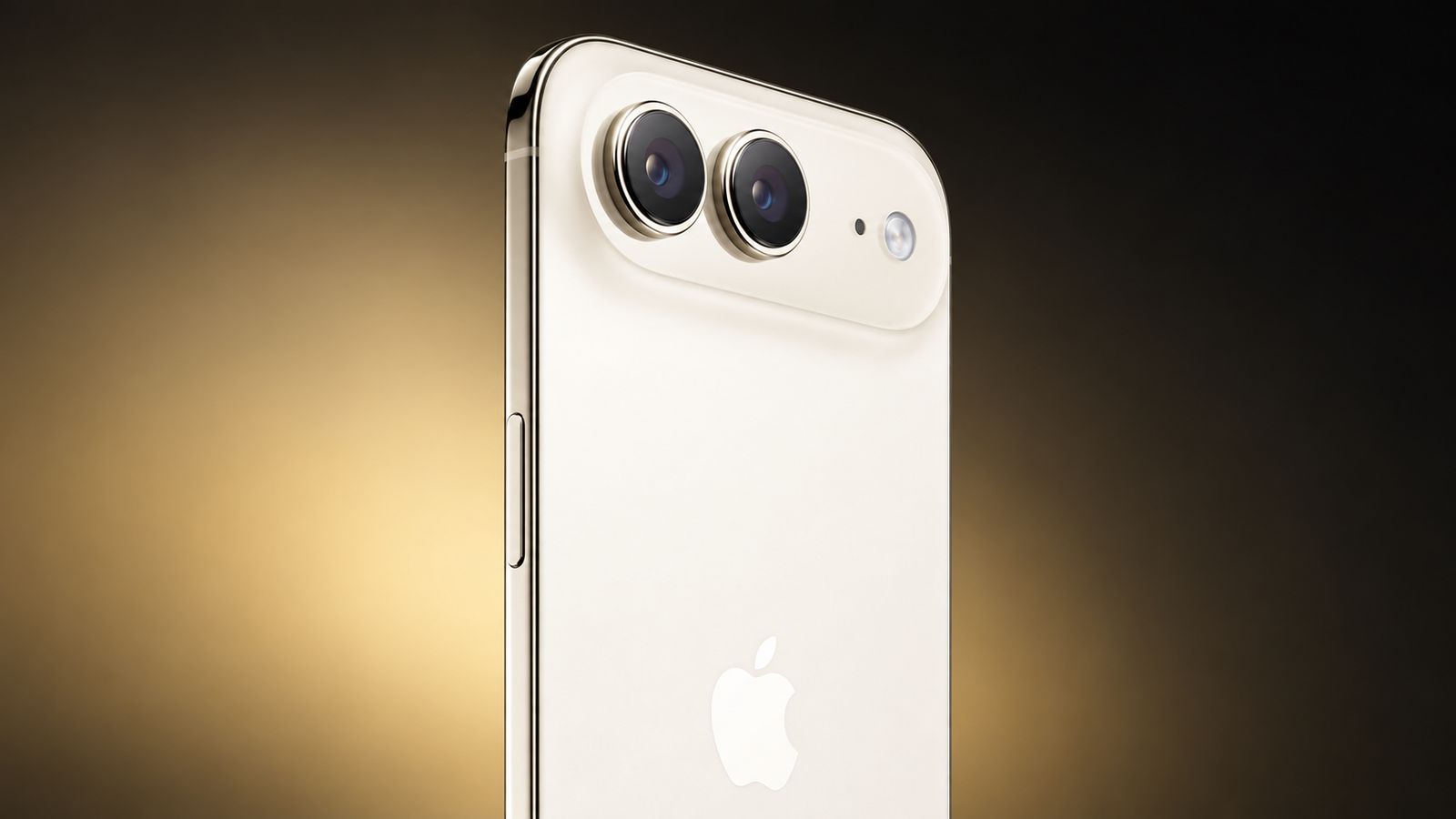
The iPhone Air 2 remains one of Apple’s more intriguing unreleased products precisely because it did not appear when some people expected it. Apple’s September lineup focused on the iPhone 18 Pro range and its first foldable iPhone, leaving the thin-and-light Air concept off the keynote stage. That absence has not killed the product, however. If anything, it has sharpened interest in when Apple plans to bring back the Air idea and how much the company is willing to change after the first-generation model drew attention for its design but also criticism for its compromises.
Recent reporting indicates the iPhone Air 2 is still in the pipeline, with the strongest claims pointing to a spring 2027 launch rather than a fall 2026 debut. The rumored device is said to be in advanced testing, with at least some prototypes adding a second rear camera and potentially improving battery life. Apple has not confirmed any of this publicly, which means the product’s timing and specifications remain unannounced. Still, the broad picture taking shape is coherent: Apple seems to view the Air as a distinct part of its portfolio, but one that may benefit from a different launch rhythm and more time to mature.
Why the iPhone Air 2 did not launch this month
The clearest explanation is Apple’s changing release strategy. Multiple reports suggest the company is reorganizing how it staggers iPhone launches, with premium models arriving first and some mainstream or specialty devices following later. Under that framework, the fall 2026 cycle belongs to the iPhone 18 Pro line and the new foldable iPhone, while the standard iPhone 18, iPhone 18e, and potentially the iPhone Air 2 are pushed to a later window. That makes the Air’s absence more strategic than alarming. It is not necessarily a cancellation story. It may simply reflect a new product calendar.
There is also a product-specific reason for patience. The first iPhone Air stood out for its slim design, but slimness usually comes with trade-offs, especially around cameras and battery capacity. If Apple wants the second-generation model to feel more complete, it makes sense to buy more development time rather than shipping an underwhelming update on the traditional September schedule. A product family centered on industrial design has to be more than visually appealing. It has to avoid feeling like the lesser choice compared with the Pro models and the standard line, and that may require more engineering work than an annual refresh allows.
The strongest iPhone Air 2 rumors so far
The most widely repeated report is that Apple is targeting spring 2027 for the iPhone Air 2, with Bloomberg-linked coverage and follow-up reporting pointing to that timeframe. Current prototypes are said to include a second rear camera for ultra-wide photography, which would directly address one of the biggest criticisms of the original model. Another expected focus is battery life. That could mean a larger battery, a more efficient design, or a combination of both. Some reports also suggest the phone could use a variant of the A20 Pro platform, though that remains unconfirmed.
Other rumored changes include a thinner Face ID system and an effort to make the device more practical without abandoning the Air identity. This balance is important. Apple likely does not want to turn the Air into a pseudo-Pro model, because that would blur the product lineup. The Air needs to remain distinct: design-forward, lighter, and more style-driven. But it also needs to fix enough pain points that people see it as a deliberate choice rather than a beautiful compromise. If the second camera and battery improvements make it to the final device, they would be exactly the kind of changes that could shift perception.
| Reported area | What is being claimed | Status |
|---|---|---|
| Launch timing | Spring 2027 | Reported, not official |
| Rear camera | Possible second camera / ultra-wide | Reported, not official |
| Battery | Improved battery life | Reported, not official |
| Chip | A20 Pro variant possible | Reported, not official |
Why Apple would keep investing in the Air line
It is easy to assume that any model with mixed early reception is living on borrowed time, but that may not be how Apple sees the Air. The company has repeatedly experimented with niche form factors in the iPhone lineup, from mini to Plus to Air-style designs, not because every one of them becomes a blockbuster, but because each one tests a distinct demand profile. The Air occupies a clear conceptual lane: people who want a premium-feeling iPhone that stands out through thinness and portability rather than through maximum camera hardware or bulkier battery capacity.
That role can still matter even if the product is not the volume leader in the lineup. A differentiated model helps Apple cover more consumer preferences and prevents the range from becoming too uniform. It also allows the company to explore engineering approaches that may later influence other products. Ultra-thin construction, lighter component stacking, and revised internal packaging are not ideas that benefit only the Air line. Even if the first-generation model sold in modest numbers, Apple may still see the category as strategically valuable, especially if a second version can solve the most obvious complaints.
What the delayed timing could mean for buyers
For potential buyers, the possible move to spring 2027 changes the decision matrix. If you were holding out specifically for the iPhone Air 2, the wait may now be longer than expected. That could push some shoppers toward currently available models such as the existing iPhone Air, the iPhone 17 family, or the newly announced iPhone 18 Pro devices. On the other hand, a longer wait could also be a positive signal. It suggests Apple is not rushing the sequel out the door and may be trying to make it more complete.
It also means the iPhone Air 2 could arrive in a less crowded product window, which might help its story land more clearly. Launching beside the Pro models and a foldable iPhone would have made it harder to command attention. A spring introduction would give the Air 2 room to be evaluated on its own merits, especially if Apple can frame it as a refined response to feedback on the original. From a buyer’s perspective, that could mean clearer positioning and a more deliberate reason to choose the Air over either the mainstream or the ultra-premium branches of the lineup.
How the iPhone Air 2 could fit into Apple’s broader iPhone roadmap
Apple’s product roadmap increasingly appears to be branching rather than remaining a single September wave. A fall premium cycle, a spring standard-and-specialty cycle, and then longer-term experiments like a 20th anniversary iPhone create a more layered portfolio. In that context, the Air 2 makes sense as a flexible piece. It can serve as a design-led alternative without getting buried under Pro marketing or competing directly with foldables for attention. That is especially useful if Apple wants to smooth revenue and keep excitement flowing across more of the calendar.
The Air line may also become a testing ground for which premium features matter most to buyers who prioritize portability. For example, would users accept a lighter phone if battery life is improved but still not Pro-class? How much does a second camera change the value equation? Can Apple maintain a strikingly thin device while making it feel less compromised? These are useful strategic questions, and a second-generation Air would help Apple answer them with real market data. That may be one reason the company seems willing to give the product more time instead of abandoning the concept after one generation.
Bottom line on the latest iPhone Air 2 rumors
Right now, the most responsible conclusion is that the iPhone Air 2 looks likely, but not imminent. The strongest reporting suggests a spring 2027 launch window, with rumored upgrades aimed squarely at the original model’s weak spots: camera flexibility and battery life. None of that is official, and Apple could still revise its plans, specifications, or timing. But the rumor picture is unusually coherent, which is often a sign that there is a real product taking shape behind the scenes rather than a loose collection of wishful leaks.
For Apple watchers, the iPhone Air 2 remains worth following because it represents more than just another model update. It reflects Apple’s ongoing effort to diversify the iPhone lineup through design-led categories and alternative release rhythms. For buyers, the practical takeaway is simple: do not expect the Air 2 immediately, but do expect the conversation to continue. If Apple gets the balance right on the sequel, the Air may shift from being a fascinating niche experiment to a more persuasive long-term part of the iPhone family.

