


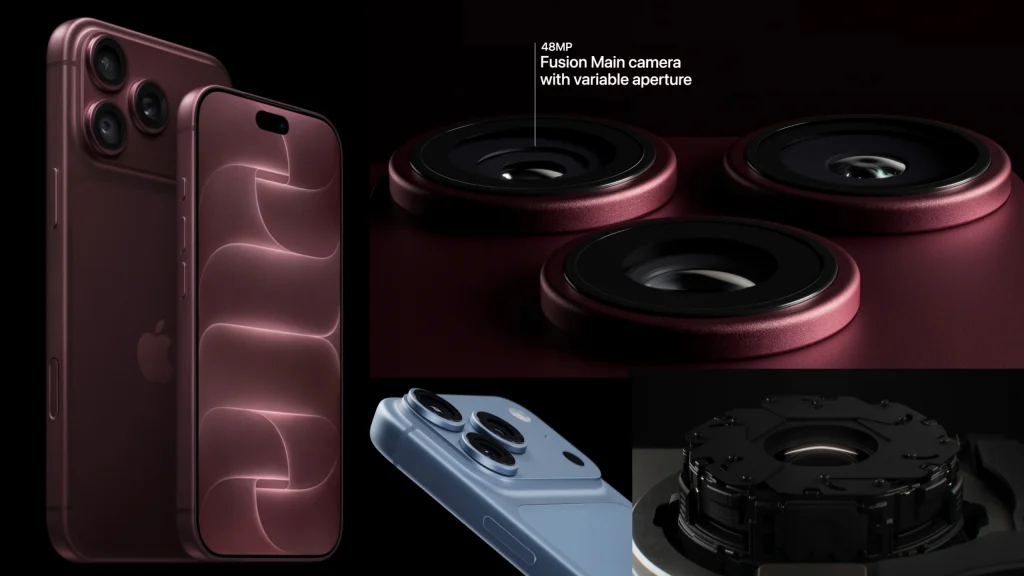
The biggest camera change in Apple’s iPhone 18 Pro and iPhone 18 Pro Max is not another increase in megapixels. It is a mechanical variable aperture in the 48MP Fusion Main camera. Announced on September 9, 2026, the new system can physically change the lens opening between four aperture settings: f/1.48, f/1.8, f/2.8 and f/4.0. Apple says six laser-cut blades are controlled by a new rotor mechanism, allowing the camera to vary how much light reaches the sensor and how much of a scene appears in focus.
That is a major shift because modern smartphone photography has largely relied on fixed-aperture lenses and computational processing to simulate many effects associated with traditional cameras. The iPhone 18 Pro still depends heavily on computational photography, but it now adds a real optical control that can change the image before software begins processing it. For casual users, the system can operate automatically. For photographers and filmmakers, Apple also provides manual aperture controls inside the Camera app and an API that allows third-party apps to access more of the aperture range.
How the iPhone 18 Pro variable aperture actually works
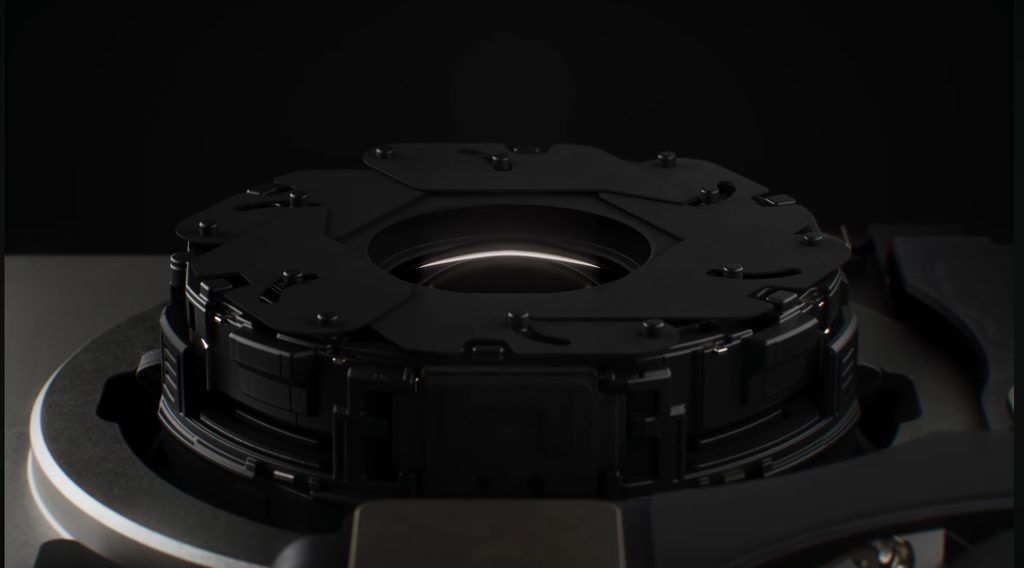
The Main camera uses a six-blade aperture assembly that changes the diameter of the opening behind the lens. A wider aperture such as f/1.48 lets in more light, which is useful in dim environments and can create a shallower depth of field. A narrower setting such as f/4.0 reduces incoming light but increases depth of field, helping keep more of the scene in acceptable focus. Apple has created four selectable stops in its own Camera app rather than presenting users with a continuously adjustable dial.
Apple says the mechanism is controlled by a compact rotor and can transition smoothly between aperture positions. The company also exposes an API for developers who want finer control across the supported range. That combination is important: Apple can keep the standard camera experience simple while giving specialized camera apps additional flexibility. The mechanical assembly is integrated into the 48MP Fusion Main camera on both iPhone 18 Pro models, so buyers do not need the larger Pro Max to get variable aperture.
What f/1.48, f/1.8, f/2.8 and f/4.0 mean in practice
At f/1.48, the camera opens widest. Apple says this setting can deliver around 50 percent better low-light performance compared with the previous Main camera under supported conditions, because more light can reach the sensor during the exposure. The practical benefit is not only brighter photos. A wider aperture can let the camera use a faster shutter speed in dim scenes, which helps reduce subject blur when people, pets or vehicles are moving. It can also reduce the need for extremely aggressive noise reduction.
The f/1.8 position is Apple’s default balance between light gathering and depth of field. Moving to f/2.8 or f/4.0 narrows the opening, which can keep more foreground and background detail sharp. Group photographs are a good example: a wide aperture may focus beautifully on the nearest face but allow people farther back to soften. A narrower aperture gives the camera more optical depth before software enhancement. The f/4.0 setting can also create starburst-like highlights around bright point sources, an effect photographers normally associate with stopped-down lenses.
Variable aperture gives Apple a new answer to computational blur
Smartphones have become excellent at simulating shallow depth of field through Portrait mode, depth maps and machine-learning segmentation. Those tools remain useful, but they are not identical to changing a physical lens aperture. Optical depth of field affects the light entering the sensor before the image is captured, including the shape of out-of-focus highlights and the transition between sharp and soft areas. The iPhone 18 Pro therefore gives photographers a second way to influence the look of a scene instead of relying entirely on software-generated blur.
This does not mean Portrait mode is obsolete. A smartphone sensor and lens remain much smaller than those in full-size cameras, so even at f/1.48 the natural background separation will be more limited than a large-sensor camera using a fast lens. Computational depth effects can still create a stronger portrait look when desired. The advantage of variable aperture is flexibility: the camera can choose a wider opening for light, a narrower opening for depth, or combine optical decisions with Apple’s processing pipeline to produce a more controlled result.
Manual Pro controls make the feature more useful than an automatic trick
Apple is expanding the native Camera app with a customizable set of Pro controls for aperture, shutter speed, white balance and exposure monitoring through a histogram. That matters because variable aperture would be much less interesting if users could not deliberately choose a setting. A photographer can now decide to stop down for a landscape, open up for low-light street photography, adjust shutter speed for motion blur and monitor the exposure without leaving Apple’s own camera interface.
The Pro controls also make the iPhone more useful as a teaching tool. Changing aperture while watching how depth of field and exposure respond gives new photographers a direct way to learn concepts that have traditionally been associated with interchangeable-lens cameras. At the same time, Apple’s automatic mode can hide that complexity when speed matters. The strongest implementation is therefore not that every user must think about f-stops, but that people who care about them finally have meaningful optical control on an iPhone.
Why the new 48MP sensor and imaging pipeline still matter
Variable aperture is only one part of the Main camera upgrade. Apple says the new 48MP sensor works with an updated computational imaging pipeline to improve detail and low-light results. The lens can physically admit more or less light, but the final image still depends on sensor readout, stabilization, noise processing, HDR merging and color science. Apple’s A20 Pro chip and Dual 16-core Neural Engine provide the computational capacity needed to process those decisions quickly.
The company has also expanded Photographic Styles with texture and grain controls, and video receives new options such as 4K Dolby Vision HDR time-lapse and post-capture Cinematic effects on supported footage. Audio Mix has been updated as well. Those additions show that Apple is treating the new aperture system as part of a broader creator-focused camera update rather than an isolated hardware specification. The most interesting results may come from how the lens, sensor and software cooperate rather than from any single aperture setting.
iPhone 18 Pro and Pro Max share the same variable-aperture Main camera
There is no camera-aperture advantage reserved for the iPhone 18 Pro Max. Both models use the 48MP Fusion Main camera with the same four aperture positions, alongside a 48MP Fusion Ultra Wide and a 48MP Fusion Telephoto. Apple lists 24mm and 48mm options from the Main camera, a 13mm Ultra Wide, and a 100mm 4x telephoto that can also provide a 200mm 8x optical-quality crop. Digital zoom extends farther, but the core optical system is shared between the two Pro sizes.
The larger Pro Max is therefore mainly a choice about display size, battery endurance and physical preference rather than getting a superior variable-aperture camera. Apple says the eSIM-only U.S. models can reach up to 36 hours of video playback on the iPhone 18 Pro and up to 45 hours on the Pro Max. Both start with 256GB of storage, with U.S. pricing beginning at $1,199 and $1,299 respectively. That makes the smaller Pro unusually compelling for photographers who want the new camera hardware without paying for the larger body.
What photographers should test before deciding how important it is
Independent reviews need to examine how quickly and reliably the aperture changes, whether the difference in natural depth of field is visually meaningful at smartphone sensor sizes, and how the mechanism performs in difficult conditions. It will also be useful to compare low-light shots at f/1.48 with images captured at narrower settings using longer exposures. Mechanical aperture systems introduce moving parts, so long-term consistency and resistance to dust, impact and temperature changes are also worth monitoring.
Another important test will be third-party camera support. Apple says developers can access an aperture API, which could make the feature more valuable for filmmakers, manual-camera apps and specialized capture workflows. If app makers expose smooth aperture transitions, custom presets and deeper exposure tools, the iPhone 18 Pro may become more flexible than Apple’s stock interface alone suggests. If support remains limited, most users will experience the feature primarily as an automatic enhancement that quietly chooses a better setting in the background.
Variable aperture is a real optical upgrade, not just a new label
The iPhone 18 Pro’s variable aperture stands out because it changes the physical capture system rather than adding another software mode. Wider apertures can improve light gathering and isolate subjects more naturally, while narrower apertures can increase depth of field and give photographers more control over scene rendering. The four native settings are simple enough for mainstream users, and the new Pro controls make the feature relevant to enthusiasts who want deliberate control.
It will not turn an iPhone into a full-frame camera, and computational photography will remain central to the final image. But that is not the point. The significance is that Apple is adding a mechanical variable to a camera system that has spent years becoming increasingly software-defined. If the implementation proves durable and third-party apps embrace it, variable aperture could become one of the most consequential iPhone camera changes in years—and a feature that competitors are likely to revisit in their own flagship phones.

